
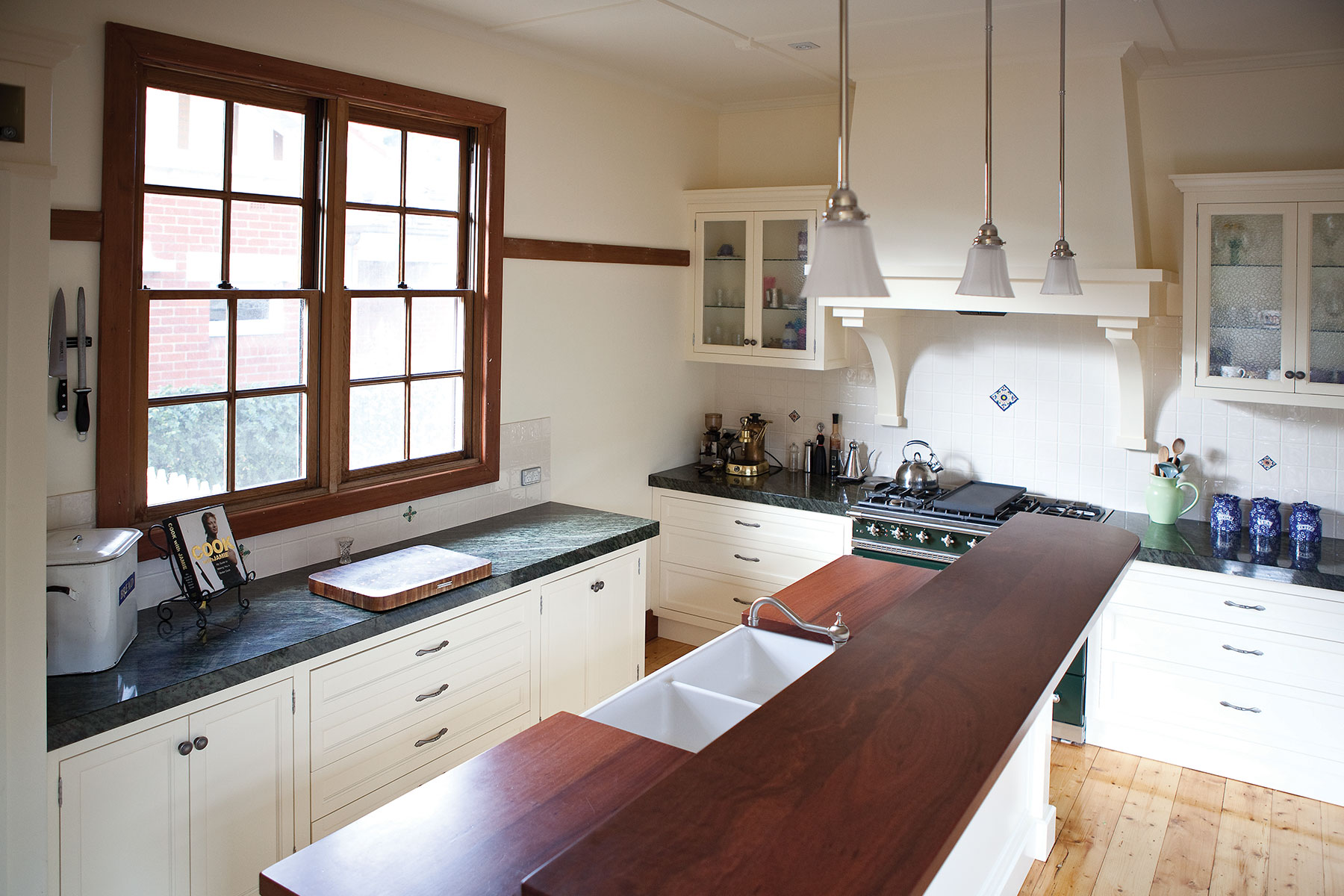
What is the Right Timber and Finish for your Custom Joinery project
When planning a new kitchen or renovating an existing space, it’s easy to get caught up in choosing colours, benchtops and cabinet handles. But one of the most important decisions happens long before those finishing touches are added: selecting the right timber and finishes for your custom joinery.
The materials you choose influence much more than the appearance of your cabinetry. They affect how your kitchen feels, how well it handles everyday use and how much maintenance it will need over time.
Whether you’re drawn to the natural warmth of timber kitchen cabinets, the understated elegance of painted cabinetry or a combination of both, understanding your options will help you make a confident decision.
At Steding Interiors & Joinery, we believe beautiful kitchens should be built to last. Through careful material selection, traditional craftsmanship and thoughtful design, we create custom cabinetry that brings together style, practicality and lasting quality.
Why Choosing the Right Custom Joinery Materials Matters
A kitchen is one of the hardest-working spaces in any home. Cabinet doors are opened countless times, drawers carry heavy cookware, and surfaces are regularly exposed to moisture, heat and everyday wear.
That’s why selecting quality custom joinery materials is so important.
While two kitchens might look similar when newly installed, the materials and construction methods behind them can make a significant difference to their long-term performance.
The right choice should consider several factors:
- Durability: How well will the material withstand everyday use?
- Appearance: Does it complement your home’s architectural style?
- Maintenance: How much care will it require?
- Budget: Does it offer suitable long-term value?
- Finish: Will the surface treatment protect the material while achieving your preferred look?
There isn’t one perfect material for every kitchen. A busy family home may have different requirements from a carefully designed entertaining space or a traditional period renovation.
The key is finding the right balance between appearance, performance and lifestyle.
American Oak: A Timeless Choice for Custom Joinery
American Oak is a popular choice for premium joinery, and it’s easy to understand why.
Known for its distinctive grain, strength and natural warmth, American Oak brings character to cabinetry without feeling overly decorative.
Its colouring typically ranges from light beige and golden tones to warmer brown shades, depending on the timber selection and finish. This versatility makes it suitable for contemporary kitchens, classic interiors and traditional joinery.
What Makes American Oak Special?
One of American Oak’s most appealing qualities is its visible grain pattern.
Unlike painted surfaces, which create a consistent appearance, natural timber introduces subtle variations that make every piece unique.
American Oak also offers practical advantages.
As a hardwood, it provides good strength and wear resistance when correctly selected, constructed and finished. It can be machined precisely, making it suitable for detailed joinery and traditional woodworking techniques.
At Steding Interiors & Joinery, American Oak is used in our handcrafted solid timber dovetailed drawer boxes. Its workability allows us to produce clean, precise joints while maintaining the strength and character of traditional timber construction.
Where Does American Oak Work Best?
American Oak can be used in several custom joinery applications, including:
- Solid timber drawer boxes and internal cabinetry details
- Feature cabinet doors and decorative panels
- Kitchen islands and timber benchtops
- Open shelving and display cabinetry
- Custom furniture and storage solutions
For homeowners who appreciate natural materials, American Oak provides a sense of warmth that can be difficult to achieve with manufactured finishes alone.
However, like all solid timber, it naturally responds to changes in temperature and humidity. Good design, appropriate construction and professional finishing are essential to managing movement over time.
Natural Timber Kitchen Cabinets: Warmth, Texture and Character
There’s something particularly inviting about a kitchen that incorporates natural timber.
Perhaps it’s the warmth of the grain, the connection to traditional craftsmanship or the way timber softens a room filled with stone, glass and metal.
Whatever the reason, natural timber kitchen cabinets remain a timeless design choice.
The Benefits of Natural Timber
Natural timber offers a distinctive appearance that cannot be exactly replicated by painted cabinetry.
Its advantages include:
Individual character: Every timber board has its own grain and colour variations, giving cabinetry a unique appearance.
Versatile design: Natural timber works beautifully in contemporary, Hamptons, country and traditional kitchens.
Long-term appeal: Carefully chosen timber can remain attractive as interior trends change.
Repair potential: Depending on the construction and finish, some solid timber surfaces can be sanded and refinished.
Natural timber also pairs beautifully with painted cabinetry. For example, a kitchen featuring soft white Shaker cabinets can be complemented by an American Oak island, timber shelving or handcrafted drawer interiors.
This combination creates contrast without making the space feel overly busy.
Things to Consider Before Choosing Natural Timber
Although natural timber is durable, it isn’t completely maintenance-free.
Timber can change colour with exposure to sunlight, and excessive moisture may cause swelling, staining or damage.
Solid timber can also expand and contract as environmental conditions change.
For these reasons, selecting an appropriate protective finish is just as important as choosing the timber itself.
A professionally applied clear coating can help protect against moisture, stains and everyday handling while allowing the natural grain to remain visible.
Painted Kitchen Cabinets: Classic Style with Modern Versatility
While natural timber celebrates texture and grain, painted kitchen cabinets offer a different kind of beauty.
They provide a clean, cohesive appearance and allow homeowners to introduce colour without being limited by the natural tones of timber.
From soft whites and warm neutrals to deep blues and muted greens, painted finishes offer enormous flexibility.
They’re particularly well suited to Shaker, Hamptons, French Provincial and traditional kitchen designs.
Why Painted Finishes Are So Popular
One of the biggest advantages of painted cabinetry is the freedom to personalise your kitchen.
A crisp white finish can make a smaller kitchen feel light and open, while darker cabinetry can create depth and sophistication.
Painted finishes also highlight architectural details.
On traditional Shaker doors, for example, a carefully applied finish draws attention to the recessed centre panel and clean frame construction.
For more decorative cabinetry, paint can emphasise mouldings, cornices and intricate profiles.
At Steding Interiors & Joinery, we manufacture Shaker doors in-house and recommend machine-grade MDF for many painted applications because of its stability, cost-effectiveness and ability to achieve a smooth, seamless finish.
Understanding MDF and Painted Joinery
MDF, or medium-density fibreboard, is an engineered wood product commonly used for painted cabinetry.
Unlike natural timber, MDF doesn’t have a visible grain pattern, making it particularly suitable for smooth painted surfaces.
Its consistent composition also helps reduce some of the movement-related issues associated with solid timber.
However, not all MDF products or painted finishes perform equally.
The quality of the board, edge preparation, sealing and coating system all influence the finished result.
Poorly sealed edges can absorb moisture, while inadequate surface preparation may lead to premature deterioration.
This is why professional manufacturing and finishing processes matter.
Choosing Between Natural Timber and Painted Finishes
Deciding between timber kitchen cabinets and painted cabinetry often comes down to the atmosphere you want to create.
Both options can deliver beautiful results, but they have different characteristics.
| Feature | Natural Timber | Painted Cabinetry |
| Appearance | Warm, textured, distinctive grain | Smooth, consistent, versatile colours |
| Design suitability | Traditional through to contemporary | Particularly versatile for Shaker and Hamptons styles |
| Durability | Strong with suitable construction and sealing | Durable with quality substrates and coatings |
| Maintenance | Requires care of protective coating | Requires gentle cleaning and occasional touch-ups |
| Colour options | Natural tones, stains and clear finishes | Extensive colour selection |
| Ageing | May develop natural colour changes | May show chips or wear over time |
For many homeowners, the most appealing solution is not choosing one over the other.
Combining natural timber features with painted cabinetry can create a balanced kitchen that feels both elegant and welcoming.
How Finishes Affect the Durability of Custom Joinery
Even the highest-quality timber needs an appropriate finish to perform well in a kitchen.
A finish does more than determine whether cabinetry looks glossy, satin or matt. It also provides a protective layer against everyday exposure.
Clear Finishes for Natural Timber
Clear finishes are designed to preserve the appearance of natural timber while adding protection.
Depending on the product, they may be available in matt, satin or gloss.
Polyurethane-based coatings are commonly considered for kitchen joinery because they can provide good resistance to wear and moisture when correctly applied.
The best coating depends on the timber species, intended use and desired appearance.
Two-Pack Painted Finishes
Two-pack, often called 2-pac, finishes are widely used in premium kitchen cabinetry.
These coating systems use components that react during curing to create a durable surface.
When professionally applied, a suitable two-pack finish can provide excellent appearance and practical resistance to everyday use.
Steding has used durable two-pack spray-painted finishes across its custom kitchen projects, including traditional Shaker and coastal Hamptons cabinetry.
However, no painted surface is completely resistant to scratches, chips or impact damage.
Proper preparation, coating selection and curing remain essential.
Maintenance Tips for Timber and Painted Kitchen Cabinets
A beautifully crafted kitchen deserves the right care.
Fortunately, maintaining quality custom joinery doesn’t need to be complicated.
Caring for Natural Timber Cabinets
To keep natural timber looking its best:
- Wipe surfaces with a soft, slightly damp cloth.
- Dry spills promptly, particularly around sinks and appliances.
- Avoid abrasive cleaning products and harsh chemicals.
- Protect surfaces from prolonged heat and direct moisture.
- Monitor areas exposed to strong sunlight.
- Follow the manufacturer’s recommendations for the specific protective coating.
Avoid using excessive water when cleaning timber cabinetry, especially around joints and exposed edges.
If a timber surface becomes scratched or worn, speak with a joinery professional before attempting to sand or refinish it.
Caring for Painted Kitchen Cabinets
Painted cabinetry is generally straightforward to maintain.
Use a soft microfibre cloth with a mild cleaning solution suitable for the coating, then dry the surface.
Avoid scouring pads, abrasive powders and strong solvents, as these can damage the paint.
Pay particular attention to cabinet doors near cooktops, sinks and frequently used preparation areas.
Grease, food residue and moisture should be removed before they build up.
Small chips may sometimes be repaired, but achieving an invisible touch-up can be difficult, particularly on factory-sprayed finishes.
For more noticeable damage, professional advice is recommended.
Why Craftsmanship Matters as Much as Materials
Choosing premium timber and finishes is an excellent starting point, but materials alone don’t guarantee a quality kitchen.
The way cabinetry is designed, manufactured and installed is equally important.
Traditional joinery techniques, accurate machining, carefully constructed doors and quality hardware all contribute to long-term performance.
At Steding Interiors & Joinery, craftsmanship is central to our approach.
Our custom kitchens incorporate traditional construction methods such as face-frame cabinetry, frame-constructed Shaker doors and handcrafted solid timber dovetail drawer boxes.
These details aren’t simply decorative. They reflect a commitment to precision, strength and the enduring qualities of well-made joinery.
We also understand that every home is different.
That’s why material and finish selections should be considered alongside the kitchen layout, cabinetry style and the way the space will be used.
Making the Right Choice for Your Home
Before committing to a timber or painted finish, consider how you want your kitchen to look and function over the coming years.
If you love natural texture, visible grain and warm tones, American Oak or another suitable hardwood may be an excellent choice.
If you prefer a consistent appearance with greater colour flexibility, painted kitchen cabinets may be more appropriate.
And if you’re drawn to both, combining painted cabinetry with carefully selected natural timber features can offer the best of both worlds.
It’s also worth viewing physical samples in your home.
Lighting can dramatically influence the appearance of timber grain, paint colours and surface sheen.
A finish that looks perfect in a showroom may appear quite different under your kitchen’s natural and artificial lighting.
Taking the time to compare samples can prevent disappointment and help ensure the finished cabinetry complements the surrounding interior.
Create a Kitchen That Looks Beautiful and Lasts
Choosing the right custom joinery materials is about more than following design trends.
It’s about creating cabinetry that suits your home, reflects your personal style and performs reliably through years of everyday use.
From the timeless warmth of American Oak to the refined elegance of painted Shaker cabinetry, each material and finish has its own advantages.
The best results come from understanding those differences and combining quality materials with skilled craftsmanship.
At Steding Interiors & Joinery, we specialise in beautifully crafted custom kitchens and cabinetry throughout Melbourne, bringing together traditional joinery methods, considered design and attention to detail.
Whether you’re planning a complete kitchen renovation or exploring options for bespoke cabinetry, our team can help you choose materials and finishes that suit your vision.
Ready to create a kitchen that’s made for your home?
Visit Steding Interiors & Joinery to explore our custom kitchen designs and discuss your project with our team.
Frequently Asked Questions
What is the best timber for custom kitchen cabinets?
American Oak is an excellent option for many custom joinery applications because of its strength, attractive grain and versatility. However, the best timber depends on the cabinetry design, budget and intended use.
Are painted kitchen cabinets durable?
Yes. Painted kitchen cabinets can be highly durable when manufactured using suitable substrates and professionally applied coatings. Quality preparation and everyday maintenance are important for long-term performance.
Is American Oak suitable for kitchen joinery?
American Oak is well suited to many kitchen joinery applications, including drawer boxes, shelving and feature cabinetry. Appropriate construction and protective finishing help ensure lasting performance.
Which is easier to maintain: painted or natural timber cabinets?
Both can be relatively easy to maintain. Painted cabinetry generally needs gentle cleaning and occasional touch-ups, while natural timber requires care to preserve its protective finish and prevent moisture damage.